School vs. Salon: Which Path Actually Gets You Licensed Faster?
Formal beauty school and salon apprenticeships lead to very different timelines, credential readiness, and day-one skill levels. Here's how the two paths actually compare.
Key Takeaways
- Formal beauty school programs run 300 to 1,000 hours depending on the license type; salon apprenticeships compress learning into shorter, less structured on-the-job periods.
- School-based training prepares you specifically for state licensing exams; salon-based learning prioritizes immediate production without formal exam prep.
- Hands-on training with real clients under instructor supervision differs from salon work, where mistakes carry real business stakes rather than being purely educational.
How the two paths differ
School-based training follows a structured curriculum with defined hour requirements tied to the license you're pursuing, technical skills, theory, sanitation, and client consultation under instructor-led guidance, with exam preparation built in from the start. Salon-based learning puts you into production work immediately: you learn through live client interaction mentored by working professionals, but there's no formal curriculum and no one designing your day around what's tested on the state exam.
Texas hour minimums vary by credential: Class A Barber ranges from 300 to 1,000 hours depending on the program, Cosmetology Operator requires 1,000 or 300 hours, an Esthetician needs 750 hours, and a Nail Technician requires 600 hours. Those hours exist to ensure enough supervised practice before you work safely and competently on your own.
Real-world practice and supervision
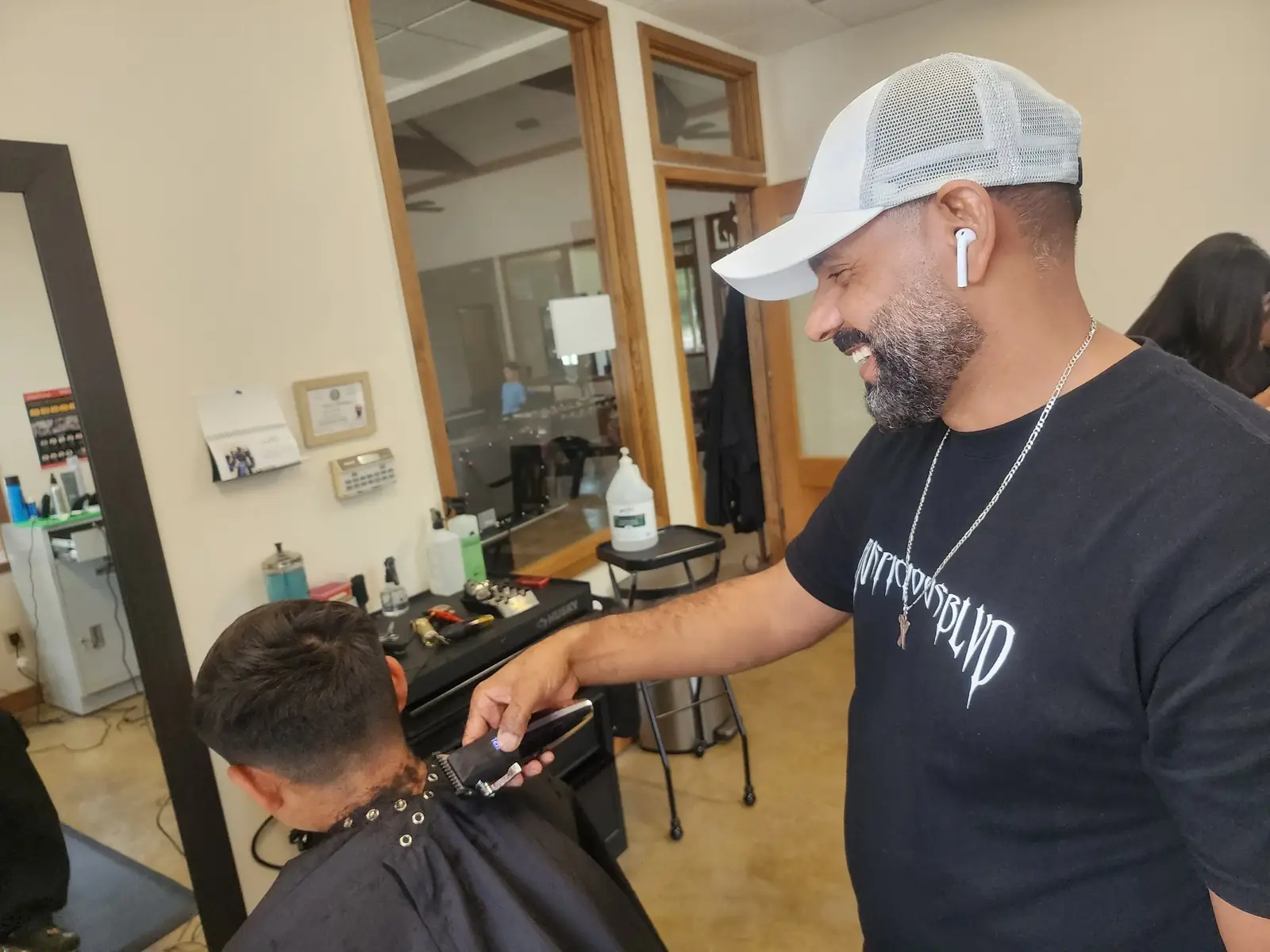
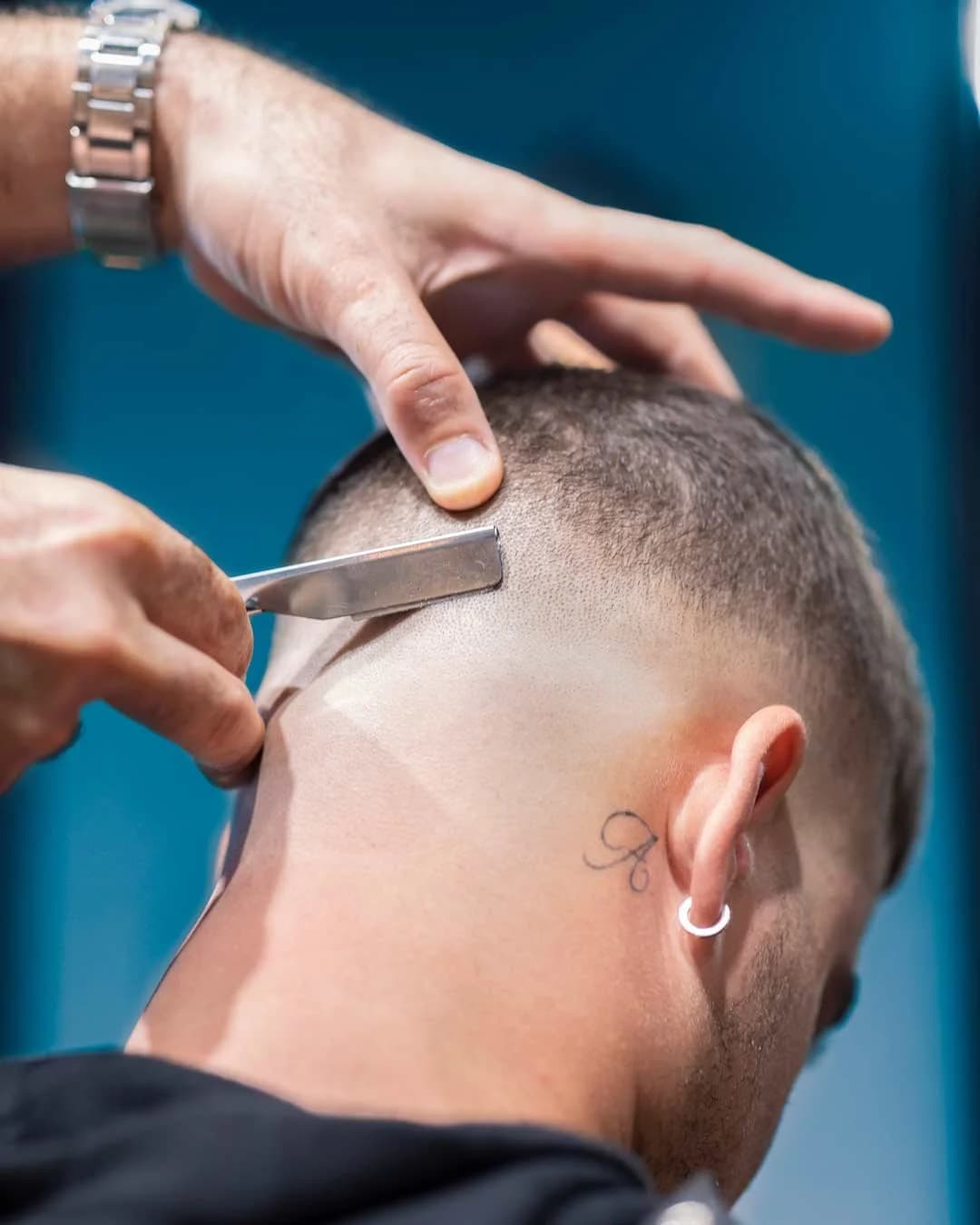
In a school environment, feedback is immediate and educational. When you misjudge a fade line or mix color incorrectly, an instructor steps in, explains what went wrong, and shows you the correction, without the client leaving unhappy or the business losing money. In a salon, you're also learning, but oversight comes from a manager or senior stylist focused on client satisfaction and productivity; if you take too long or make an error, it affects the schedule, the client's experience, and your standing with the team.
That difference in supervision shapes how you learn from mistakes. School gives you room to experiment and try a technique twice if the first attempt doesn't land. Salon work demands you get it right the first time or recover quickly, pressure that accelerates speed and client communication but can also push you to skip foundational technique.
Licensing, timeline, and cost
School-based programs design their curriculum around state exam content from the start, so graduates typically pass on their first or second attempt. Salon-trained workers may eventually qualify to test through accumulated hours depending on the state's apprenticeship rules, but without formal exam prep they often need additional self-study before passing, which delays licensure.
Cost structure is the other side of the equation. School tuition is an upfront investment, usually with flexible payment plans, and longer programs generally cost more than 300-hour crossovers. Salon work pays you while you learn, but any additional exam prep you need later comes out of pocket after months or years of work.
Frequently Asked Questions
If I start at a salon instead of school, can I still get licensed?
It depends on your state's apprenticeship laws. Some states allow accumulated supervised salon hours to count toward eligibility to test; others require formal school enrollment. Even where apprenticeships are allowed, the path is often longer and less structured.
Will on-the-job salon learning alone get me ready for the state exam?
Probably not without additional study. Salon work teaches the services that specific business offers, but state exams test a broader range of technique, sanitation, and theory that may never come up in daily production.
Can I work with real clients during beauty school, or is it all mannequins?
You work with real clients under instructor supervision as a core part of hands-on training. Mannequins are used early on for foundational technique, but most program hours involve live client services in a school clinic setting at reduced rates.
Ready to take the next step?
Explore our licensed training programs or stop in for a walk-in service in our student clinic.